Why the Philippine Peso Exchange Rate Is Approaching ₱64
When the US dollar becomes more expensive, Filipinos may feel the effects even if they never exchange money themselves. From fuel and imported groceries to online purchases and travel expenses, changes in the Philippine peso exchange rate can influence the cost of everyday living.
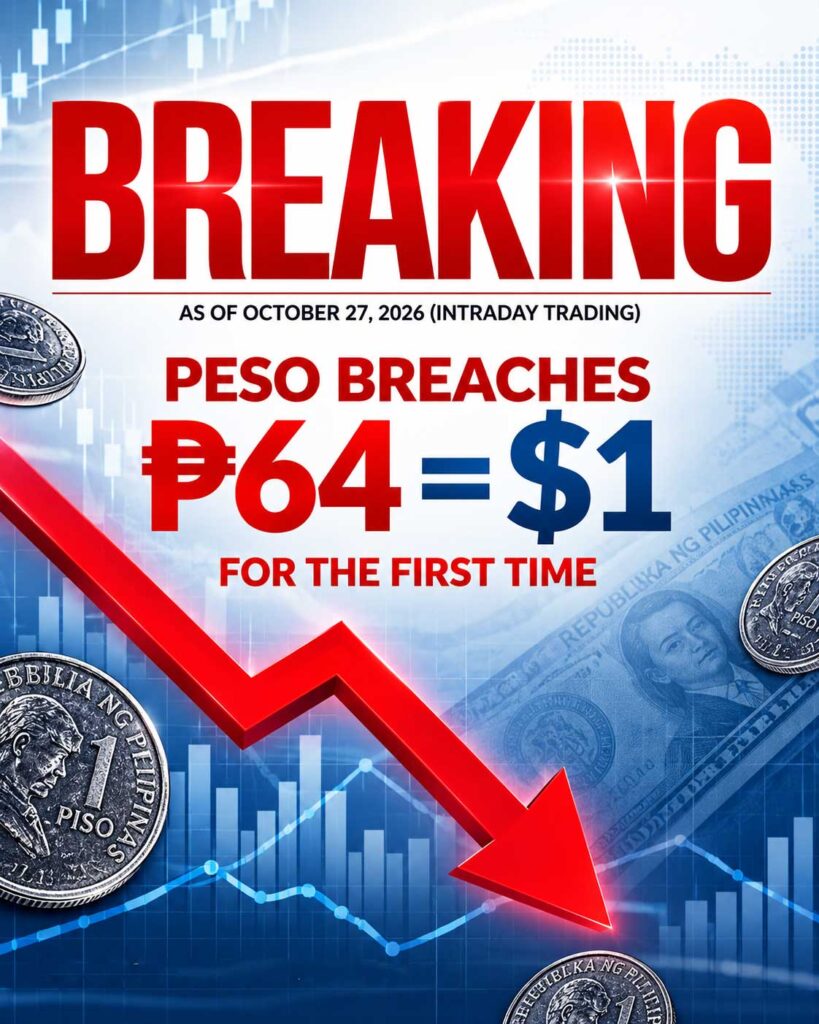
In late October 2026, the peso came close to the ₱64-per-dollar level, marking another period of weakness against the US currency. Market data showed the US dollar reaching an intraday high of approximately ₱64.05 on October 26, while reports published on October 27 said the peso had weakened to around ₱63.95 per dollar at the previous market close.
These figures help explain the headlines about the peso approaching or briefly crossing ₱64. An intraday exchange rate is not necessarily the same as the official closing rate, and rates displayed by currency converters may differ from those offered by banks, money changers, and remittance services.
For Filipino households, overseas workers, business owners, and people saving in foreign currencies, understanding what a weaker peso means can help with budgeting and financial planning.
What a Weaker Peso Means for Everyday Expenses
The exchange rate measures how much one currency is worth relative to another. When the peso weakens against the US dollar, more pesos are needed to purchase the same amount of dollars.
For example, if an imported item costs US$100, its peso value would be ₱6,000 at an exchange rate of ₱60 per dollar. At ₱64 per dollar, the same item would have a peso equivalent of ₱6,400 before shipping charges, taxes, retailer markups, and other expenses.
This example illustrates the currency conversion effect, not a prediction that every imported product will increase in price by the same amount. Actual retail prices depend on contracts, inventories, transportation expenses, and decisions made by importers and sellers.
Fuel and transportation
Oil is traded internationally in US dollars, making the exchange rate an important factor for Philippine fuel costs. If the peso weakens while international oil prices remain elevated, importing petroleum can become more expensive in local currency.
However, pump prices do not move according to the exchange rate alone. Global oil prices, supply conditions, taxes, inventory costs, and local pricing adjustments also influence what motorists pay.
For households, a useful response is to monitor transportation spending and review regular trips. Combining errands, planning commutes, and setting aside a realistic amount for fuel or public transportation can help manage changing expenses.
Imported goods and groceries
The Philippines purchases various products and raw materials from overseas markets. A weaker peso can increase the cost of imported food ingredients, electronics, appliances, industrial supplies, and other merchandise, although the effect may take time to reach consumers.
Not every product will become more expensive immediately. Some businesses may absorb part of the increase, while others may adjust prices when they replenish their inventories or renew supplier contracts.
If household expenses begin rising, review grocery receipts and distinguish essential purchases from items that can wait. Comparing unit prices and planning meals around affordable ingredients can help keep spending under control without relying on drastic budget cuts.
Why Is the Peso Losing Ground Against the US Dollar?
Currency movements usually reflect several forces rather than one isolated event. In October 2026, reporting on the peso’s decline pointed to external pressures, higher oil prices, geopolitical uncertainty, and concerns about investor confidence.
When international investors become more cautious, demand for US dollars can increase. The dollar is widely used in international trade and finance, so uncertainty in global markets can influence currency movements in countries such as the Philippines.
Changes in interest rates also matter. Investors compare returns across countries, taking into account interest rates, inflation, economic prospects, and currency risks. Higher domestic interest rates do not automatically guarantee a stronger peso if other pressures continue to weigh on the market.
The Bangko Sentral ng Pilipinas (BSP) has to consider currency pressures alongside inflation and economic activity when setting monetary policy. Interest rate decisions can influence borrowing and spending, but their effects on exchange rates depend on broader market conditions.
It is also important to distinguish a weaker currency from a complete assessment of the Philippine economy. The exchange rate is one indicator among several, and its movement alone does not establish whether every household, company, or economic sector is performing worse.
How Overseas Filipino Workers and Families Can Respond
A weaker peso can benefit some households receiving money from relatives working abroad. When a remittance arrives in US dollars, each dollar may convert into more pesos at a higher USD-to-PHP rate, before transfer fees and provider exchange-rate margins.
For example, a US$500 remittance converts to ₱30,000 at ₱60 per dollar, compared with ₱32,000 at ₱64 per dollar. The difference is ₱2,000 before fees, but the actual amount received depends on the provider’s quoted rate and charges.
That additional peso value can help families cover bills, education expenses, groceries, or savings. Still, families should avoid assuming that favorable exchange rates will continue or spending future remittances before they arrive.
For Filipinos earning in pesos but paying for services or purchases priced in dollars, the situation may be the opposite. Subscriptions, overseas travel, foreign tuition, and international purchases can become more expensive when converted into local currency.
A practical strategy is to identify which expenses are directly exposed to foreign exchange rates. If you regularly pay dollar-denominated bills, check the conversion rate and applicable fees before making a payment, and consider setting aside a small buffer for exchange-rate changes.
Practical Budgeting Tips as the Peso Weakens
You cannot control currency markets, but you can make your household budget more resilient to changing prices. Start by reviewing the expenses most likely to be affected by imported products, transportation, and foreign-currency payments.
Track essential expenses
Review the past month of grocery, fuel, utility, transportation, and online shopping expenses. Compare them with your usual spending to identify which categories are increasing and whether the changes are temporary or recurring.
Build a flexible spending plan
Separate fixed commitments, such as rent and debt payments, from flexible categories such as dining out and nonessential shopping. If essential costs rise, adjust discretionary spending first where practical instead of immediately sacrificing necessary healthcare, food, or other basic needs.
Compare exchange rates and fees
If you send or receive money internationally, compare the final amount that will be delivered rather than looking only at the advertised exchange rate. Transfer fees and exchange-rate margins can make a meaningful difference to the amount received.
Protect your emergency savings
Unexpected price increases can make an already tight budget more difficult. Building an emergency fund gradually can provide a buffer for essential expenses, particularly when income is irregular or household costs are changing.
Avoid making rushed investment or currency-exchange decisions simply because the peso is approaching a widely discussed level. Exchange rates can move in either direction, and short-term market headlines do not guarantee future movements.
Frequently Asked Questions About the Peso-Dollar Exchange Rate
Has the peso reached ₱64 per US dollar?
Market data showed the dollar reaching approximately ₱64.05 during intraday trading on October 26, 2026. The peso-dollar rate was also reported around ₱63.95 at the previous market close. The precise rate depends on the time, market source, and type of exchange-rate quotation.
Will a weaker peso make everything more expensive?
No. A weaker peso can raise the local cost of imported goods and dollar-priced expenses, but the effect varies by product and business. Domestic supply, competition, taxes, international prices, and existing inventory can influence whether and when consumers see a price change.
Is a weaker peso good or bad for OFW families?
It can benefit families receiving US-dollar remittances because those dollars may convert into more pesos. However, families who need to pay dollar-denominated expenses may face higher costs. The overall effect depends on the household’s income, spending, and financial obligations.
As the peso-dollar exchange rate continues to fluctuate, check reliable market updates and the actual rates offered by your bank or remittance provider. Review your next month’s budget, identify expenses that may be affected by currency movements, and make adjustments based on your household’s real costs rather than assuming the exchange rate will keep moving in one direction.