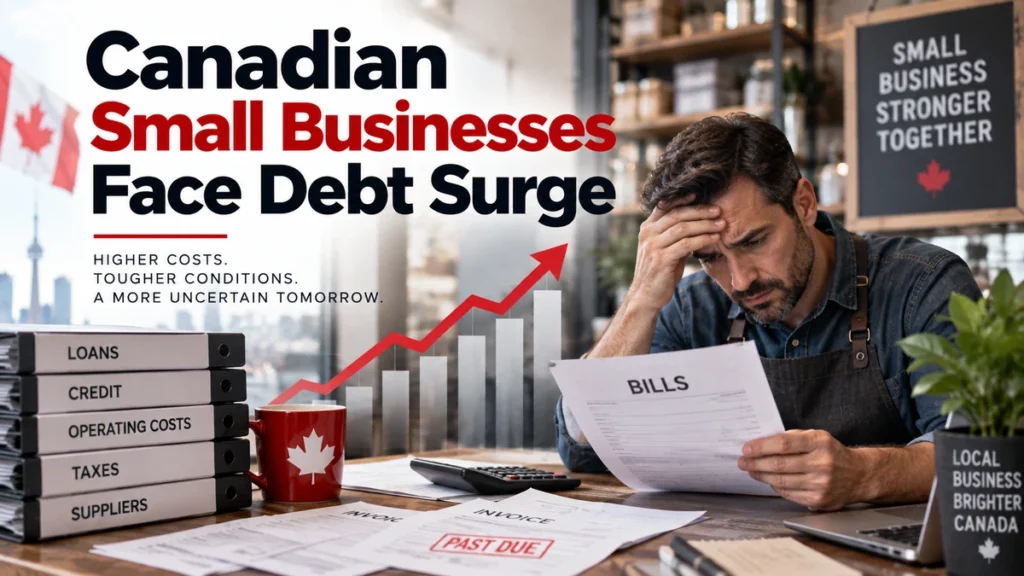
Canadian Small Businesses Face Debt Surge
When debt piles up faster than revenue, small business owners face impossible choices. Here’s how to protect your finances.
small business debt management
Understanding the Small Business Debt Crisis
Small businesses across Canada are drowning in accumulated debt while struggling to navigate unpredictable economic conditions. When tariffs shift unexpectedly and operating costs climb, many business owners find themselves trapped between growing liabilities and shrinking profit margins. This isn’t just a temporary cash flow hiccup—it’s a structural problem affecting how businesses plan, budget, and survive.
The pressure intensifies when local governments provide minimal support. Many business owners discover that municipal resources, grants, and relief programs are either unavailable or so restrictive that accessing them becomes nearly impossible. Without institutional backing, entrepreneurs must become financial strategists overnight, learning to manage small business debt using whatever tools they can access independently.
How Tariff Uncertainty Destabilizes Business Budgets
Tariffs create a cascading effect through business finances. When import costs fluctuate, suppliers raise prices without warning. Businesses that can’t pass these costs directly to customers absorb the hit in their margins. This unpredictability makes traditional budgeting nearly impossible.
The real damage happens when businesses must make decisions with incomplete information. Should you stock up before tariffs increase, tying up cash reserves? Or wait and risk paying higher prices later? These aren’t rhetorical questions—they represent tens of thousands of dollars in potential losses. Without clarity, business owners often choose to borrow money as a buffer, adding to their debt burden rather than reducing it.
For small business owners, this means building a more flexible financial strategy that accounts for uncertainty. Rather than creating a rigid 12-month budget, consider creating quarterly reviews where you reassess based on actual tariff changes and supply costs.
Creating a Debt Management Strategy Without Municipal Support
When external help isn’t available, internal discipline becomes essential. Business owners need to separate essential expenses from those they can eliminate or reduce. This requires honest conversations about what truly drives revenue versus what simply feels necessary.
Start by categorizing all business expenses into three groups: non-negotiable (rent, payroll, essential supplies), flexible (marketing budgets, professional development, discretionary purchases), and questionable (subscriptions you’ve forgotten about, redundant services, outdated tools). Many businesses discover they’re spending 15-20% on category three items that could be eliminated immediately.
- Review all subscriptions and software licenses—cancel anything unused in the past 90 days
- Negotiate supplier contracts during slow periods when vendors are motivated to retain customers
- Delay non-critical capital purchases until cash flow stabilizes
- Consolidate services with fewer vendors to increase bargaining power
The key is creating a debt reduction timeline. Rather than simply “paying down debt,” assign specific amounts to be eliminated each quarter. If you owe ₱500,000 across multiple creditors, decide to pay ₱50,000 quarterly from operational savings. This creates accountability and momentum.
Protecting Cash Flow When Revenue Is Unpredictable
Inconsistent revenue makes debt payments feel impossible. A business that earns ₱100,000 some months and ₱60,000 others can’t commit to fixed debt payments without risking insolvency. This is where cash flow forecasting becomes a survival tool, not just accounting busywork.
Track your actual revenue patterns for at least 12 months if possible. Most seasonal businesses follow predictable cycles—they just don’t always remember them when planning. Once you identify your pattern, set aside a portion of high-revenue months specifically for debt payments during low-revenue months. If March typically brings 30% more revenue than February, commit 50% of that extra income to debt reduction rather than spending it as it arrives.
Building even a modest emergency fund—equivalent to 2-3 weeks of operating expenses—prevents small cash flow dips from forcing new borrowing. This creates a buffer that keeps debt from growing while you work on reducing it.
Strategic Priorities When You Can’t Pay Everything
Business owners often face impossible triage situations: which bills get paid this month? This is where priority becomes clear financial strategy rather than panic-driven decisions.
Payroll must come first—without employees, you have no business. Essential supplier payments come next, because losing suppliers means losing the ability to generate revenue. Debt payments and discretionary spending come after these non-negotiables are covered. This hierarchy prevents businesses from paying unsecured debt while becoming unable to operate.
If you’re carrying multiple debts, consider contacting creditors to explain your situation before missing payments. Many creditors prefer restructured payment plans to defaults. A conversation that results in 18-month repayment terms instead of 12 months might be the breathing room your business needs to stabilize.
Building Resilience Into Your Business Model
Beyond immediate debt management, businesses need structural changes that reduce vulnerability to future shocks. This might mean diversifying suppliers so you’re not entirely dependent on tariff-sensitive imports. It might mean developing service offerings that complement your physical products, creating multiple revenue streams.
Pricing strategy matters too. If tariffs are increasing your costs by 10%, but you can only pass 5% to customers before losing sales, you have a fundamental business model problem that debt management alone won’t solve. Some businesses need to consciously shift toward higher-margin offerings or higher-value customers who can absorb price increases.
Questions Small Business Owners Ask About Debt Management
Should I consolidate my business debt into a single loan? Consolidation can simplify payments and sometimes lower your interest rate, but it extends your repayment timeline and costs more in total interest. It makes sense if you’re struggling with multiple payments and need cash flow relief, but it’s not a solution—it’s a restructuring.
What’s the best way to approach creditors about restructured payments? Contact them before you miss a payment. Explain your situation clearly, propose specific new payment terms you can meet, and demonstrate that you’re being proactive. Documentation helps—show them your cash flow forecasts and explain exactly why restructuring benefits them more than default.
How much revenue growth do I need to eliminate debt faster? Even 15-20% revenue growth often allows businesses to keep operations running while dedicating the new income entirely to debt reduction. Focus on profitable growth, not just volume—10% growth in high-margin services is more powerful than 20% growth in low-margin products.
The path forward starts with acknowledging where you are financially, then creating a specific debt reduction plan tied to realistic cash flow projections. Review your budget this week, identify one category where you can cut expenses by 10%, and commit that savings to debt reduction rather than letting it disappear into daily operations. Small, consistent progress compounds over months—but only if you start now.