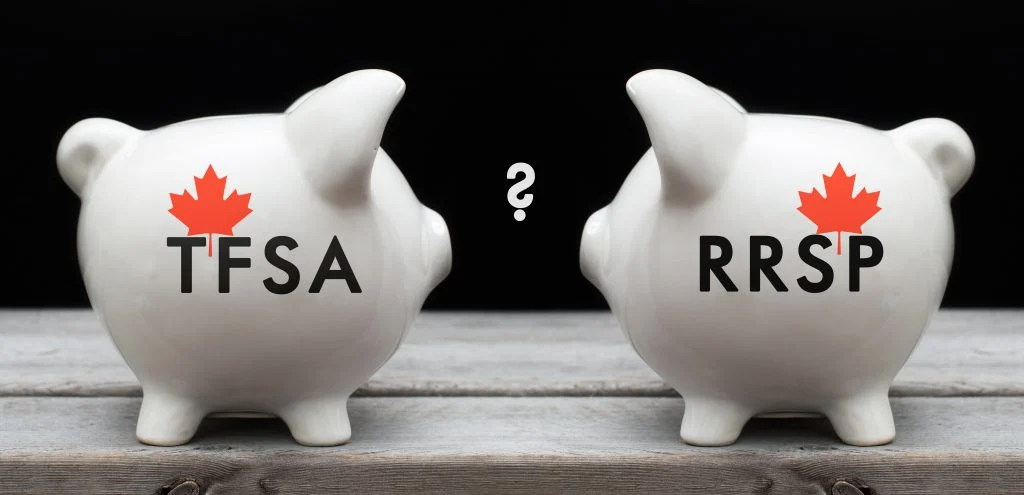
RRSP vs TFSA in Canada: Which is Better in 2026?
Introduction
When it comes to saving and investing in Canada, two of the most powerful tools available are the RRSP (Registered Retirement Savings Plan) and TFSA (Tax-Free Savings Account). Both offer tax advantages, but they work in very different ways.
In 2026, many Canadians still struggle to decide which account is better for their financial goals. The truth is, there is no one-size-fits-all answer—it depends on your income, lifestyle, and long-term plans.
Before choosing between them, it helps to understand how RRSP and TFSA fit into a full retirement strategy, which you can explore here: 👉 RRSP vs TFSA Guide for 2026
What is an RRSP?
The RRSP is a retirement-focused savings account designed to help Canadians save for the long term.
Key features:
- Contributions are tax-deductible
- Taxes are paid when you withdraw funds
- Ideal for retirement savings
- Encourages long-term investing
The RRSP is best used when you expect to be in a lower tax bracket during retirement.
What is a TFSA?
The TFSA is a flexible savings and investment account that allows your money to grow tax-free.
Key features:
- Contributions are not tax-deductible
- Withdrawals are completely tax-free
- No tax on investment growth
- Flexible access to funds anytime
The TFSA is ideal for both short-term and long-term savings goals.
RRSP vs TFSA: Key Differences
1. Tax Treatment
- RRSP: Tax-free contributions, taxed on withdrawal
- TFSA: Tax-paid contributions, tax-free withdrawals
2. Flexibility
- RRSP: Limited withdrawals before retirement
- TFSA: Fully flexible withdrawals anytime
3. Purpose
- RRSP: Retirement savings
- TFSA: General savings and investments
4. Impact on Income
- RRSP: Reduces taxable income today
- TFSA: No impact on taxable income
When to Choose RRSP
RRSP may be better if:
- You earn a higher income
- You want to reduce taxes now
- You are focused on retirement savings
- You expect lower income after retirement
RRSPs are powerful for long-term tax planning.
For a deeper retirement strategy, read: 👉 Retirement Planning in Canada 2026
When to Choose TFSA
TFSA may be better if:
- You want flexibility
- You are saving for short-term goals
- You are in a lower income bracket
- You want tax-free withdrawals
TFSA is ideal for emergency funds and flexible investing.
Can You Use Both?
Yes—many financial experts recommend using both RRSP and TFSA together.
A combined strategy allows you to:
- Reduce taxes (RRSP)
- Maintain flexibility (TFSA)
- Diversify savings strategies
- Optimize long-term wealth
To better plan contributions, you can use this tool: 👉 Retirement Savings Calculator 2026
Common Mistakes to Avoid
- Only using one account without strategy
- Withdrawing RRSP early without planning
- Not contributing consistently
- Ignoring tax implications
Understanding how each account works is key to success.
Tips for Maximizing Benefits
- Use RRSP for long-term retirement planning
- Use TFSA for emergency funds and flexibility
- Increase contributions gradually
- Invest within both accounts for growth
To further improve your pension strategy, read: 👉 Maximize Pension Guide 2026
Conclusion
The RRSP vs TFSA decision in 2026 depends on your financial goals. RRSPs are powerful for retirement and tax savings, while TFSAs offer flexibility and tax-free growth.
For most Canadians, using both accounts strategically provides the best financial outcome. The key is consistency, planning, and long-term thinking.