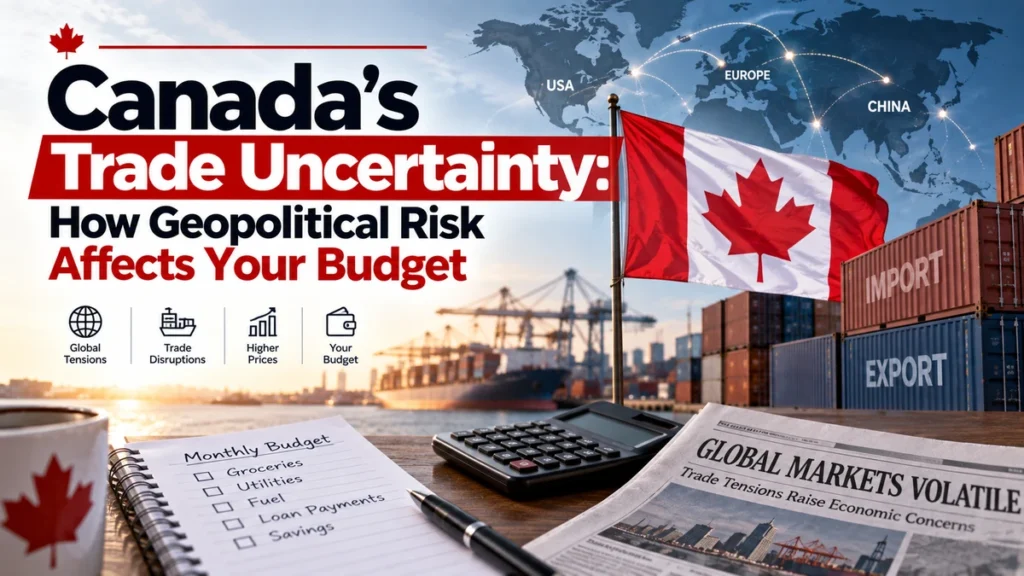
Canada’s Trade Uncertainty: How Geopolitical Risk Affects Your Budget
Understanding Trade Uncertainty and Your Wallet
When major economies face trade disputes, the ripple effects reach ordinary households faster than most people realize. Tariffs, import restrictions, and trade negotiations directly influence the prices you pay at the grocery store, the cost of imported goods, and even employment opportunities in certain sectors. Trade uncertainty creates budget volatility that many families struggle to navigate.
The current geopolitical landscape reminds us that external economic factors can disrupt even the most carefully planned household budget. Understanding how trade policies work gives you the foundation to build financial resilience when global events create market instability.
How Trade Disputes Impact Your Daily Expenses
Trade uncertainty affects consumer prices in measurable ways. When countries impose tariffs on imported goods or when trade talks break down, businesses pass these costs to consumers. Products ranging from electronics to clothing to food items become more expensive when supply chains face disruption or when import duties increase.
For families operating on tight budgets, even small price increases across multiple categories compound quickly. A 5-10% jump in imported goods expenses could mean reallocating funds from entertainment or savings toward essential items. Recognizing this pattern helps you prepare rather than react when prices shift unexpectedly.
Employment sectors tied to international trade—manufacturing, agriculture, transportation, and retail—experience particular vulnerability during trade tensions. If your income depends on these industries, understanding the geopolitical environment becomes part of your financial planning strategy.
Building Financial Resilience Through Budget Strategies
Trade uncertainty makes the case for maintaining an emergency fund stronger than ever. Financial advisors generally recommend keeping three to six months of essential expenses set aside. When external shocks like trade disruptions occur, this buffer prevents you from derailing long-term financial goals or taking on high-interest debt.
Start by tracking your current spending across categories—groceries, utilities, transportation, and discretionary purchases. Once you understand where your money flows, you can identify which expenses might fluctuate due to trade policies. Groceries and imported goods typically show the most sensitivity to tariff changes.
Consider implementing a diversified spending approach: buy some staple items when prices are stable, reduce reliance on single-source imported products, and explore local alternatives when available. This strategy reduces your exposure to price shocks in any single category.
Protecting Your Income During Economic Shifts
Trade disputes create employment uncertainty in affected sectors. If your industry faces potential disruption, now is the time to assess your job security and income stability. This might mean updating your resume, developing new skills, or exploring side income opportunities that aren’t vulnerable to the same trade pressures affecting your primary job.
Building multiple income streams provides insurance against economic shocks. A freelance skill, part-time consulting, or small business venture creates financial flexibility when primary employment faces uncertainty. Even modest additional income—₱5,000 to ₱10,000 monthly from side work—significantly strengthens your financial position during volatile periods.
Review your professional development too. Industries facing trade headwinds often shift toward domestic alternatives or different business models. Positioning yourself for these transitions requires understanding industry trends and investing in relevant skills now.
Smart Spending During Trade Volatility
When trade negotiations remain uncertain, consumer prices often fluctuate before stabilizing. Strategic timing of major purchases can yield meaningful savings. Large purchases like appliances, vehicles, or technology—typically imported goods—may be worth accelerating before additional tariffs take effect, or delaying if price relief appears likely.
This doesn’t mean panic buying or making emotional purchases. Rather, it means staying informed about trade news and making deliberate choices about timing for planned, significant expenses. Delayed purchases require discipline—only implement this strategy for items you were already planning to buy within the next 6-12 months.
Everyday spending deserves attention too. Building a grocery list focused on seasonal, locally-produced items protects your food budget from import-related price swings. Buying generic brands instead of imported specialty items and planning meals around what’s currently affordable stretches your food budget further during uncertain periods.
Reviewing Your Investment and Savings Strategy
Trade uncertainty affects different investment sectors differently. Industries dependent on international supply chains may face headwinds, while domestic-focused businesses might benefit. If you maintain investment or retirement accounts, review whether your portfolio remains appropriately diversified across sectors less vulnerable to trade disruptions.
This doesn’t require becoming an investment expert. Simply ensure your savings aren’t overly concentrated in single industries or trade-dependent sectors. Balanced diversification naturally provides some protection regardless of which geopolitical events unfold.
For savings goals, prioritize high-yield options that outpace inflation during uncertain periods. As prices potentially rise from trade disruptions, savings vehicles that offer competitive returns help preserve your purchasing power. Regular contributions to these accounts, even modest amounts, compound effectively over time.
Common Questions About Trade Impacts and Your Budget
Q: How quickly do trade disruptions affect consumer prices?
Trade policy changes typically influence prices within 2-6 months as supply chains adjust and retailers adjust their pricing. Perishable goods and frequently-purchased items respond faster than durable goods. Monitoring price trends at your regular shopping locations gives you early warning of changes affecting your household.
Q: Should I stockpile goods if tariffs seem likely?
Strategic stockpiling of non-perishable essentials makes sense only for items with long shelf lives that you use regularly. Buying three months’ worth of canned goods or household supplies when prices are stable provides genuine savings. However, avoid excess stockpiling that requires additional storage space or encourages waste.
Q: What budget categories typically face the most price pressure from trade uncertainty?
Imported groceries, electronics, clothing, and vehicles typically show the most sensitivity. Domestic products, local services, and locally-produced food items provide more price stability. Diversifying your consumption across both imported and domestic alternatives naturally balances your exposure.
Taking Action This Week
Start by auditing your household budget for imported goods. Spend 30 minutes listing your regular purchases and identifying which items come from international sources. Next, research local or domestic alternatives for the categories where you spend most. Finally, calculate how a 10-15% price increase in your top three import-dependent categories would affect your monthly budget.
This exercise reveals your true vulnerability to trade disruptions and guides where to focus your resilience-building efforts. From there, implement one concrete strategy—whether that’s increasing your emergency fund, exploring side income, or diversifying your grocery sourcing—before trade news creates urgent pressure to act. Building financial flexibility today protects your family from tomorrow’s uncertainties.