How to Invest $1,000 for Beginners in Canada (2026 Guide)
Investing can feel intimidating, especially if you’re starting small. But even $1,000 can be a powerful first step toward building long-term wealth if used wisely.
If you’re still comparing where to put your money, it also helps to explore broader beginner-friendly options here:
Safe Investments for Beginners in Canada 2026
Whether you want to grow your wealth, earn passive income, or simply learn how investing works, this guide will show you how to invest $1,000 safely and effectively in Canada.
Why Investing $1,000 Matters
Many beginners think they need thousands to start investing, but that’s not true. Starting small has several advantages:
- Learn without risking too much capital
- Benefit from compound growth over time
- Build consistent investing habits early
Even small contributions can grow significantly over the long term when invested consistently.
Step 1: Decide Your Goal
Before investing, define your time horizon:
- Short-term (1–3 years): High-interest savings accounts or GICs
- Medium-term (3–7 years): Balanced ETFs or dividend stocks
- Long-term (7+ years): Growth stocks, ETFs, or mutual funds
Your goal determines your risk level and investment choice.
Step 2: Choose Your Investment Options
1. Stocks
Buying individual stocks means owning shares of a company.
Pros:
- High growth potential
- Dividend income opportunities
Cons:
- Higher risk
- Requires research
Tips:
- Start with stable companies
- Diversify across sectors
2. Exchange-Traded Funds (ETFs)
ETFs allow you to invest in a group of stocks and bonds in one product.
Pros:
- Diversification
- Low fees
- Lower risk than individual stocks
Cons:
- Moderate returns compared to high-growth stocks
ETFs are often recommended for beginners building long-term portfolios.
3. Mutual Funds
Mutual funds are professionally managed investment portfolios.
Pros:
- Professional management
- Built-in diversification
Cons:
- Higher fees than ETFs
- Performance varies
4. Robo-Advisors
Robo-advisors automate investing based on your goals and risk level.
Pros:
- Hands-off investing
- Beginner-friendly
- Automatic rebalancing
Cons:
- Slightly higher fees than DIY investing
You can compare platforms here:
Best Investment Apps in Canada 2026
5. Cryptocurrency (High Risk Option)
Crypto can be part of a small portfolio, but it is highly volatile.
Tips:
- Limit to 5–10% of your portfolio
- Use trusted platforms only
To understand risk differences, see:
Stocks vs Crypto in 2026
Step 3: Open an Investment Account
In Canada, common account types include:
- TFSA (Tax-Free Savings Account): Tax-free growth (recommended for beginners)
- RRSP (Registered Retirement Savings Plan): Tax-deferred retirement savings
- Non-Registered Account: Flexible but taxable
For most beginners, a TFSA is the best starting point due to tax advantages.
Step 4: Diversify Your Portfolio
Even with $1,000, diversification is important:
- 50% ETFs – stable long-term growth
- 30% Stocks – higher growth potential
- 10–15% Robo-advisor or mutual funds – managed exposure
- 5–10% Crypto (optional) – high-risk allocation
Diversification helps reduce risk while maintaining growth potential.
Step 5: Use Investment Apps
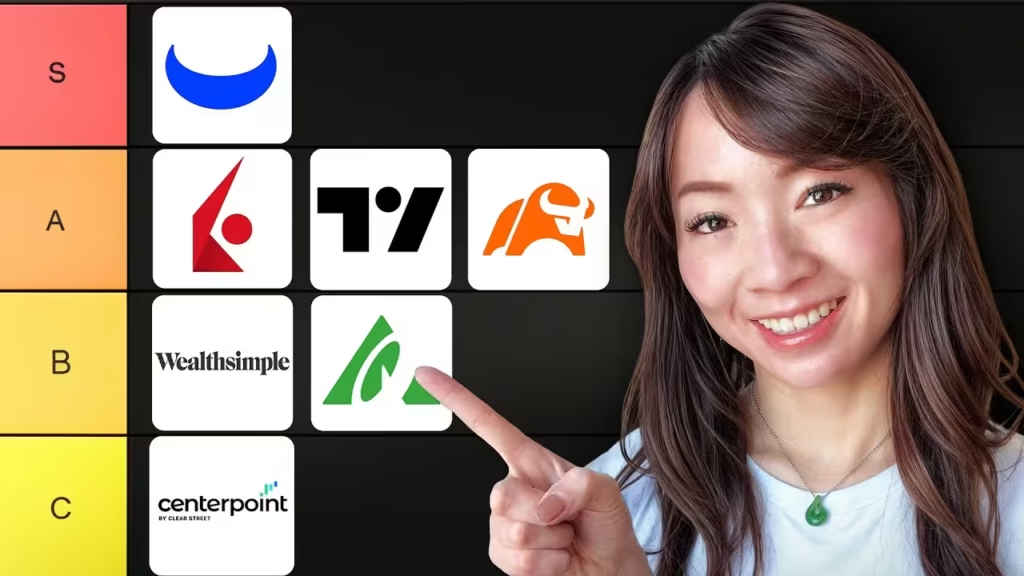
Popular beginner-friendly platforms in Canada include:
- Wealthsimple – easy, automated investing
- Questrade – low-fee trading platform
- Newton – crypto-focused investing
For more options, see:
Best Investment Apps in Canada 2026
Step 6: Monitor and Adjust
- Review your portfolio quarterly
- Rebalance annually
- Avoid emotional decisions during market drops
Investing is about consistency, not timing the market.
Tips for Beginners
- Start small and scale gradually
- Focus on low-cost investments
- Keep learning about financial markets
- Stay patient—investing is long-term
Final Thoughts
Investing $1,000 is not about quick profits—it’s about building a strong financial foundation.
Key Takeaways:
- Define your investment goal
- Diversify your portfolio
- Use beginner-friendly tools like ETFs and robo-advisors
- Stay consistent and reinvest earnings
Starting today gives your money more time to grow. Even small investments can become meaningful wealth over time when managed properly.